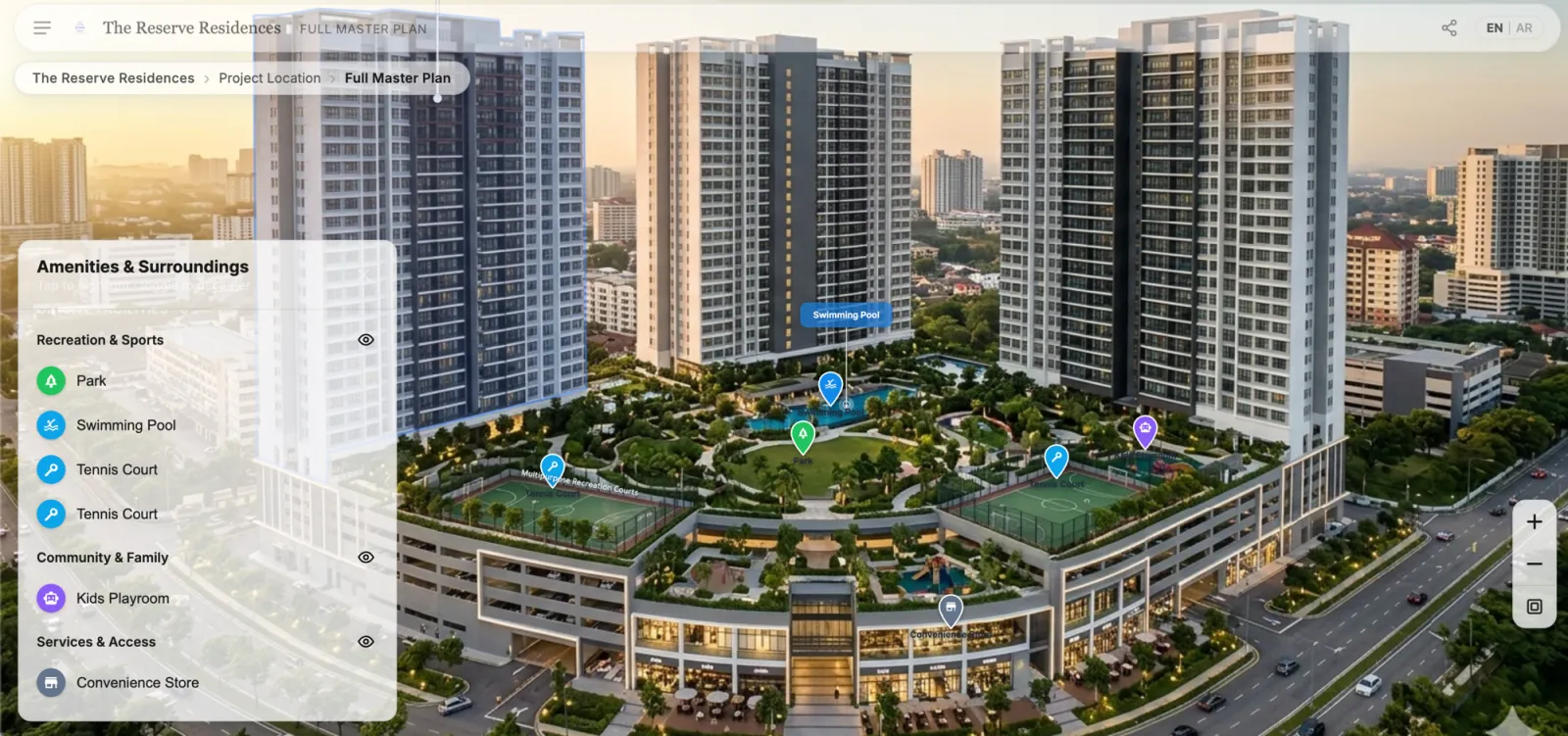
A digital sales center is a platform that turns a developer's visual sales assets — site plans, building views, floor plans, and unit layouts — into interactive experiences that buyers can explore online.
Unlike a traditional website with static images and PDF downloads, a digital sales center lets buyers navigate a development the way they would in a physical sales gallery: starting from the master plan, drilling into a building, selecting a floor, and viewing individual units.
What is a property sales gallery?
A property sales gallery — often shortened to "sales gallery" — is the space where a developer presents a project to buyers: scale models, floor plan boards, material samples, and a sales team, usually in a showroom near the site. It is where a buyer has traditionally gone to understand a development and choose a unit.
A digital (or virtual) sales gallery moves that same job online. Instead of a scale model on a table, the buyer navigates an interactive master plan; instead of floor plan boards, clickable floors with live availability; instead of a consultant reading from a price list, an enquiry attached to the exact unit. "Digital sales center" and "digital sales gallery" describe the same thing from two angles — the gallery names the buyer experience, the sales center names the software behind it.
For how the two formats compare on reach, cost, and when to use each, see virtual sales gallery vs physical showroom.
Core capabilities
A complete digital sales center includes four layers:
Interactive exploration
Deep-zoom imagery, 360° panoramic views, and interactive overlays let buyers explore the development at their own pace. Hotspots connect scenes together — master plan to building, building to floor, floor to unit.
Visual authoring
Sales and marketing teams can create, update, and publish interactive experiences without engineering support. Place hotspots, configure navigation paths, manage inventory status, and publish new versions from a visual workspace.
Lead capture
Every buyer interaction becomes a potential lead. Enquiry forms, callback requests, and interest registrations capture not just contact details but the full exploration context — which project, building, floor, and unit the buyer was viewing.
Buyer analytics
Session analytics, engagement heatmaps, and conversion funnels show which parts of the experience attract attention and where buyers drop off. This data informs pricing, marketing, and release decisions.
Who uses a digital sales center?
- Real estate developers launching residential, commercial, or mixed-use projects
- Sales teams managing buyer enquiries and follow-ups
- Marketing teams running campaign landing pages and digital launches
- Real estate agencies managing portfolios across multiple developments
How it differs from a website
A property website shows information. A digital sales center lets buyers explore. The difference is interactivity, navigation depth, live availability, and contextual lead capture — all powered by the developer's existing visual assets.
Related reading:
- Digital Sales Center Software: How to Choose in 2026
- Best Virtual Tour Software for Property Developers in 2026: How to Choose
- Why Static Brochures No Longer Work for Real Estate Sales
- Digital Property Sales in Southeast Asia
- Why Contextual Leads Are More Valuable Than Contact Forms
RegalScene is a digital sales center platform for real estate. See how it works or book a demo.