A Kuala Lumpur high-rise launch runs through the sales gallery. It is where the model sits, where the touchscreen shows the view, where the negotiator walks a buyer through the stack. It works, for the buyer who is standing in it. The buyer who cannot visit, or who leaves and keeps thinking, gets a PDF brochure and a floor plan image, and has to reconstruct the whole thing from memory.
A virtual sales gallery closes that gap. It takes what the physical gallery does and puts it in a link, so the exploration continues after the visit and starts before it.
The KL context: vertical, dense, and multi-tower
Kuala Lumpur sells upward. A development such as Tun Razak Exchange, the city's 70-acre financial district, carries around six residential towers holding more than two thousand apartments alongside offices, retail, and a hotel. KL Eco City packs three residential towers, a serviced-apartment tower, three office towers, twelve boutique office blocks, and a mall onto roughly 25 acres. These are public examples of the shape KL projects take: several towers, mixed products, phased over time, on tight urban land.
That shape is hard on static collateral. One brochure per tower, a floor plan file per typology, and an availability sheet that ages by the weekend. A buyer weighing a high floor in one tower against a mid floor in another is opening three files and trusting none of them.
Where the floor plan and the price list stop talking
The specific failure in high-rise selling is the gap between the floor plan and availability. The floor plan lives in one document. The price list and availability live in another. A buyer likes unit 23-05, and still cannot tell whether it is available, reserved, or already sold without messaging an agent, who checks a sheet, who checks with the gallery.
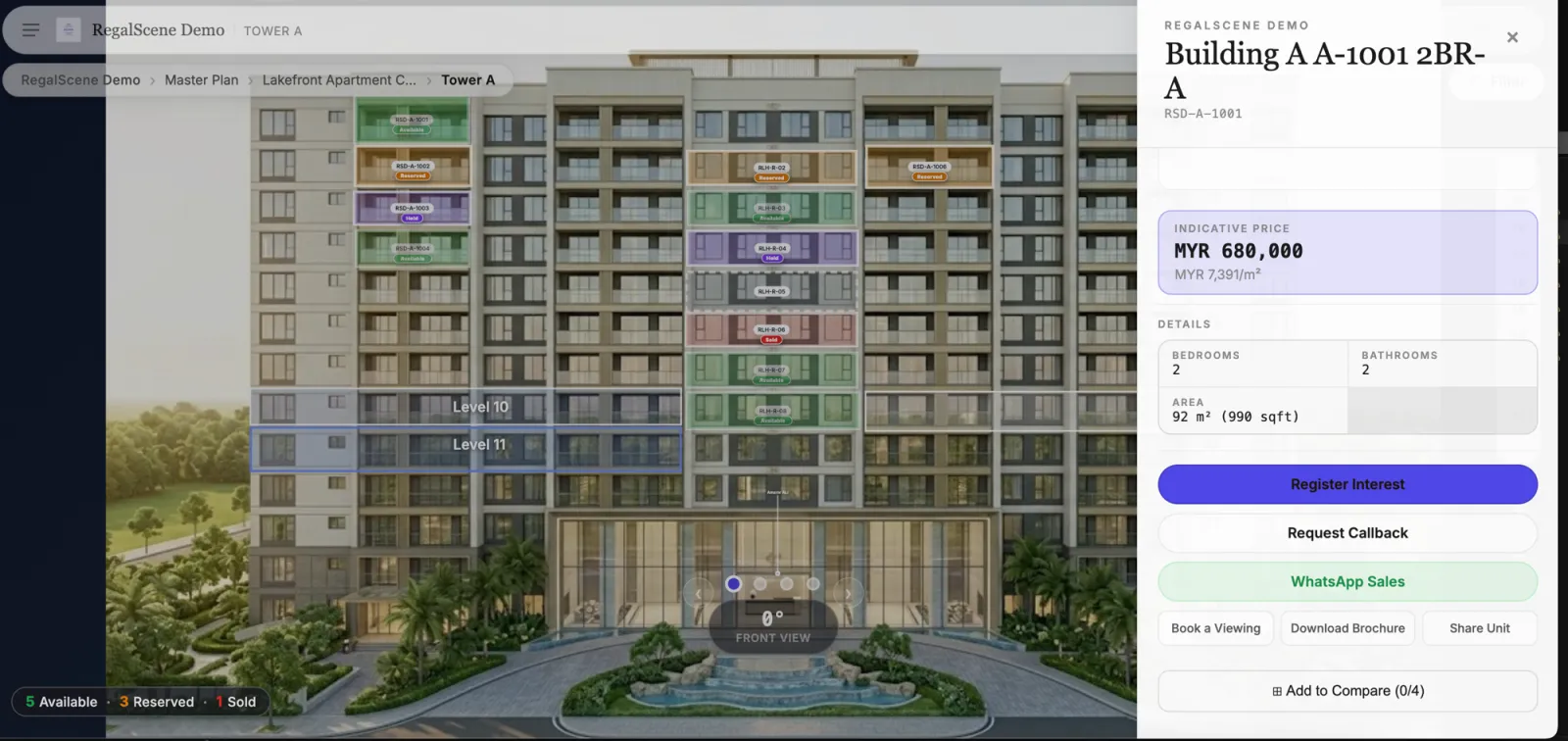
An interactive floor plan closes that gap by drawing status on the plan itself. The unit a buyer taps carries its own state, and the price sits with it under the developer's display policy. What was three documents and a phone call becomes one tap.
In high-rise selling, the buyer's real question is not what the unit looks like. It is whether they can still have it.
From the tower to the unit
A virtual sales gallery leads a buyer down the vertical journey the physical model only implies:
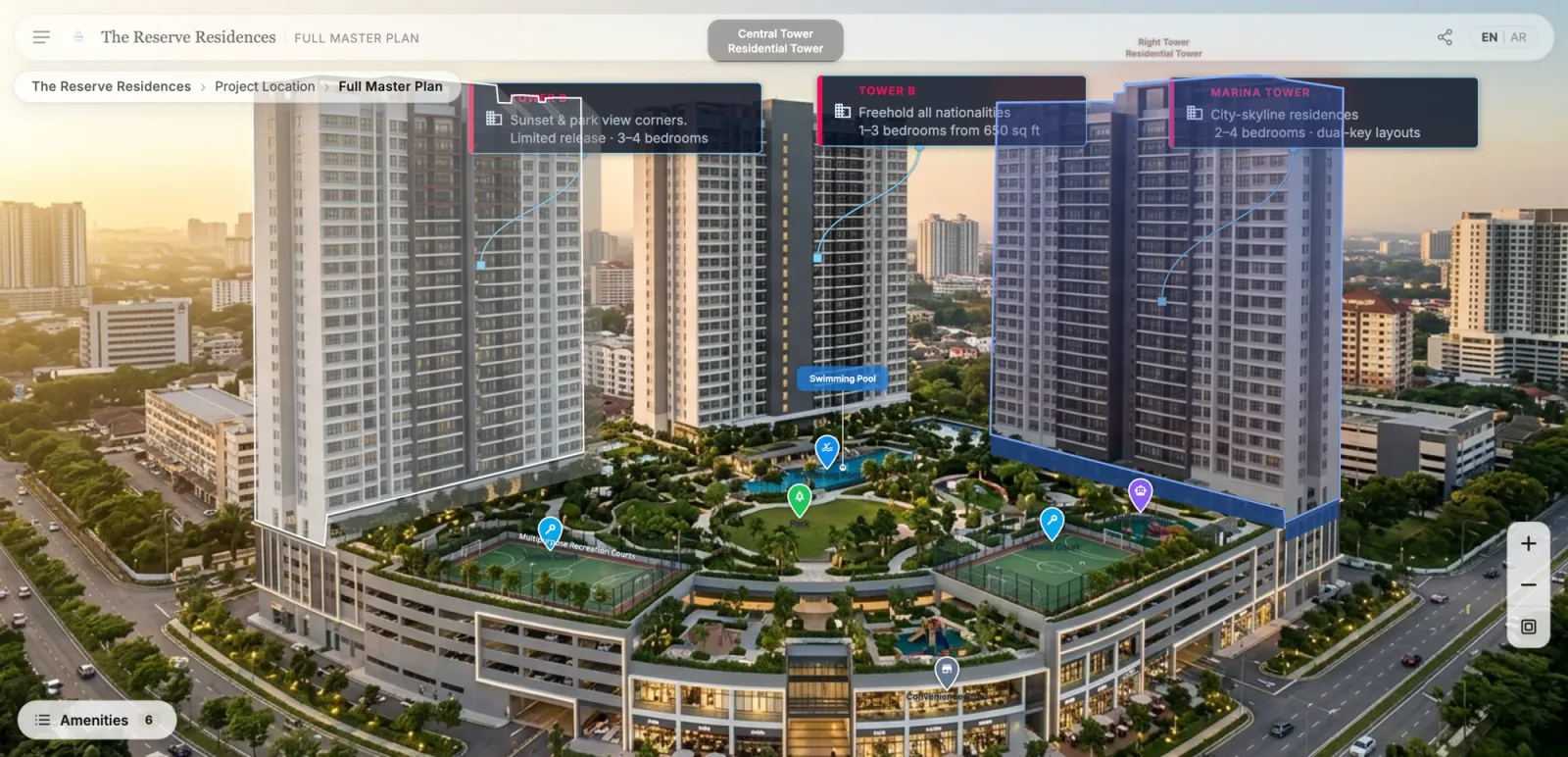
- Site plan. The development from above, towers labeled and clickable, phases marked.
- Tower. Enter a tower and its stacking plan appears: floors banded by availability, the high floors and the sold-out bands obvious at a glance.
- Floor plate. A floor opens to its layout, each unit drawn in place with its typology and status.
- Unit. The unit shows its plan, its price under the display policy, its orientation and view, and the way to enquire.
- Enquiry. The buyer enquires from the unit, and the lead carries which tower, which floor, and which unit they were on.
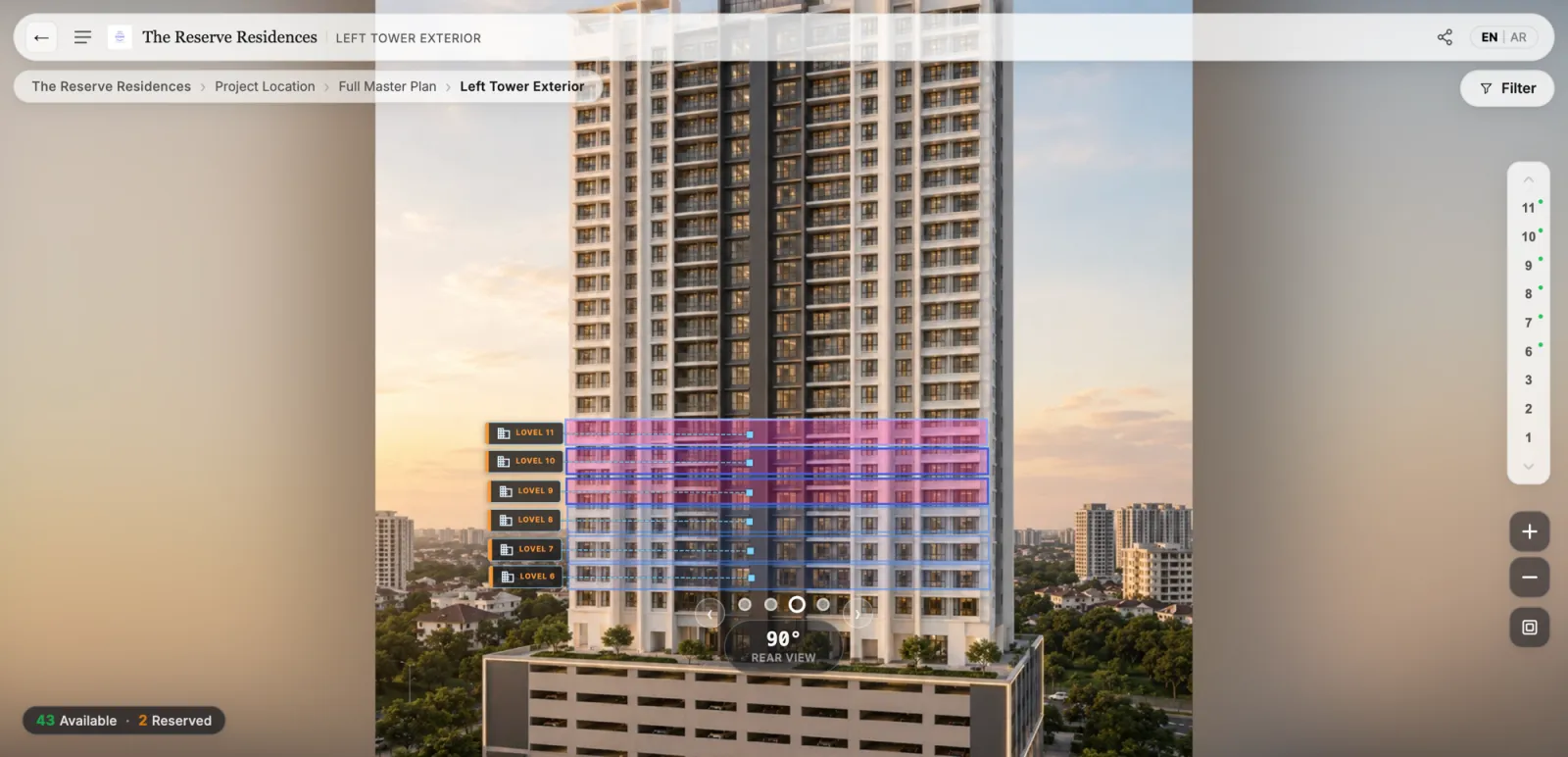
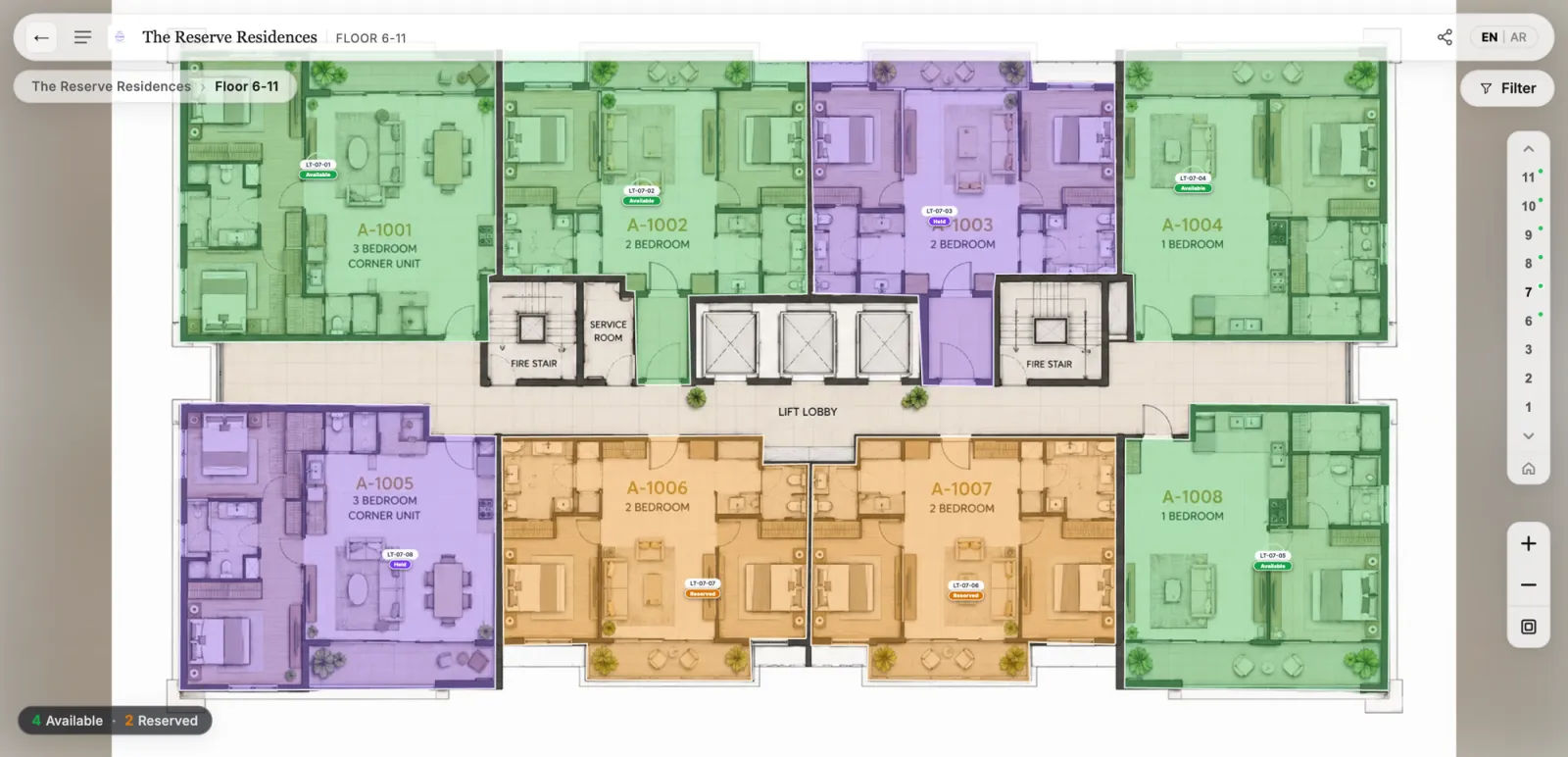
A buyer moves from the whole project to a single apartment in about a minute, following the same map, building, floor, and unit structure used across the experience. For a KL project with several towers, this is also the difference between a multifamily site plan that scales and a folder that does not.
The virtual gallery, beside the physical one
This is not a replacement for the sales gallery. It is the same experience on a different screen. On the gallery's touchscreen, a negotiator walks a buyer through the stack live. On the buyer's phone that evening, the exact same link lets them keep looking, share it with a spouse, and come back to the unit they liked. For an overseas buyer, common in KL, the gallery visit that used to require a flight becomes a link they open first, and the flight comes later, warmer.
The difference between a digital sales gallery and the physical one is not quality. It is reach and hours. The physical gallery is unbeatable for the buyer inside it and closed to everyone else; the online version has no walls and no opening time.
None of the developments named above are RegalScene projects. They stand only as public examples of KL's multi-tower, high-rise scale.
A larger project does not mean more scenes
Developers expect a bigger project to cost more to put online, tower by tower. It does not work that way. RegalScene prices by active scene capacity, and a scene is a meaningful authored view, not a unit or a floor. A tower's stacking plan can be one scene; the hundreds of apartments inside it are inventory on that scene, not scenes of their own.
A multi-tower KL launch could begin with a site plan and one tower, and add deeper scenes only where buyers want them: a second tower, a 360 view from a high floor, a show-unit walkthrough. The reasoning behind pricing by scenes rather than units goes further, and the current figures are on the pricing page.
The number of apartments does not set the cost. The number of authored views does.
Built for the phone, and the overseas buyer
A KL apartment is often sold to a buyer holding a phone in another city. The virtual sales gallery has to reach them there. It opens in a normal browser from a single link, with nothing to install, and a dense tower loads quickly on a standard smartphone for the same reason large master plans stay fast in a browser. The same link works on the gallery touchscreen, in an agent's WhatsApp message, and on the buyer's own screen, showing current availability every time.
What this asks of the developer
Three things make a high-rise experience hold up. The inventory has to be the live source of status, so a sold unit reads as sold the moment the team updates it. The display policy has to be the developer's call, so whether prices show to buyers or only to agents is set centrally. And the experience has to carry every tower and phase in one link, so a later tower publishes into the same place the first buyers already bookmarked, with no new microsite.
For a launch that runs for months and a project that sells for years, the virtual sales gallery is a small line against the show-gallery and media budget, and it works every hour the physical gallery is closed.
See your towers made interactive
The fastest way to judge this is on a tower you are selling now. Bring a stacking plan and a unit schedule, and watch a buyer move from the site plan to a single available apartment to an enquiry, in a browser, on a phone.
Related reading:
- Multifamily Interactive Site Plan Software: One Map to Every Unit
- Turning KL Floor Plans Into Interactive Buyer Journeys
- Digital Sales for Multi-Tower Developments in KL
- Interactive Floor Plan Software: From Static Plan to Live Availability
- Digital Sales Gallery vs Physical Sales Gallery: What Changes
- Map, Building, Floor and Unit Views: How to Present a Project Online
- Why RegalScene Prices by Scenes, Not Units
RegalScene turns the site plans, stacking plans, and floor plans KL developers already have into one interactive sales gallery, from tower to unit, in any browser. See the platform or tell us about your project.